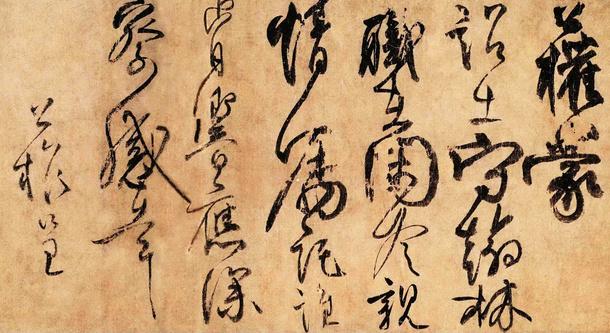
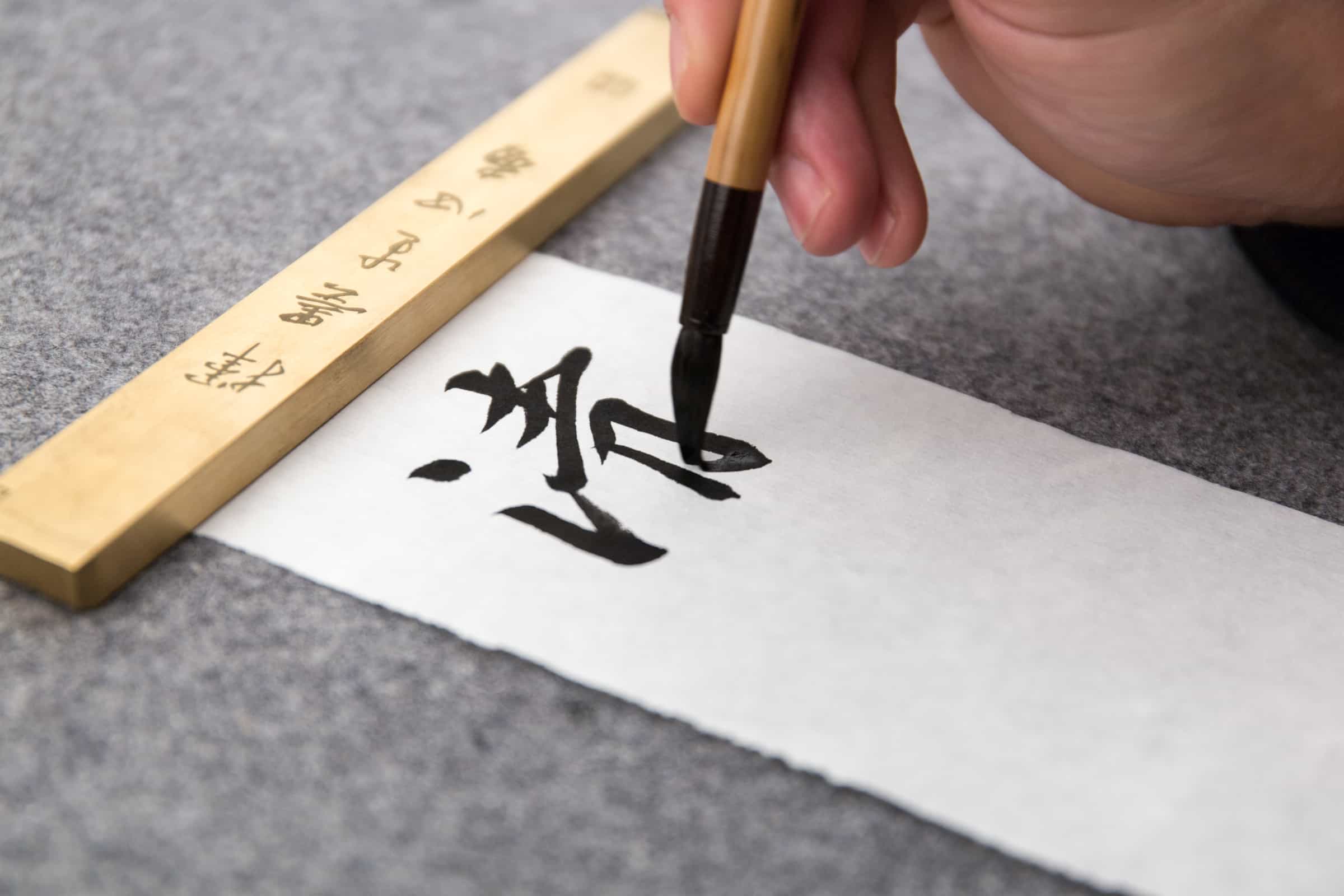
This article was written by Teacher Gu Dian, who uses the vivid analogy of mopping and sweeping floors to describe two different brush techniques in Chinese calligraphy and the distinct effects they create. I believe this will be helpful to everyone, so I’m sharing it here.
The full article is as follows:
There are two ways to move a Chinese brush: one is similar to dragging a mop across the floor, and the other is like sweeping, where you actively push the broom across the floor with force. The floor represents the paper, the mop represents a long-tipped soft goat hair brush, and the broom represents an elastic short-tipped firm bristle brush.
The Dragging Technique
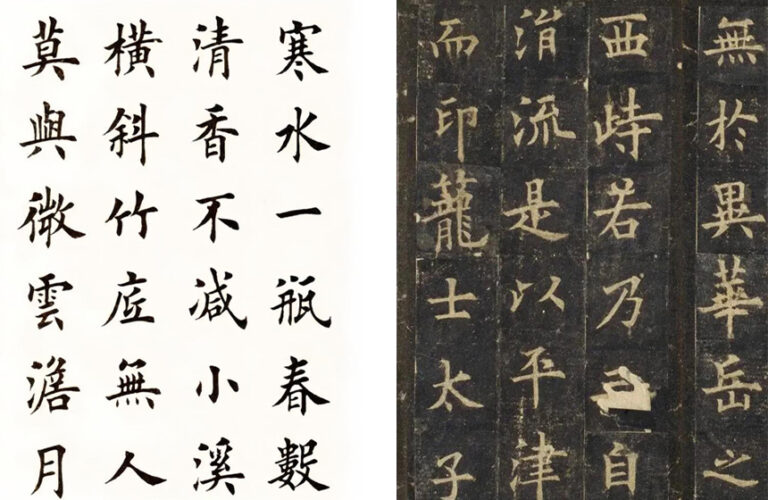
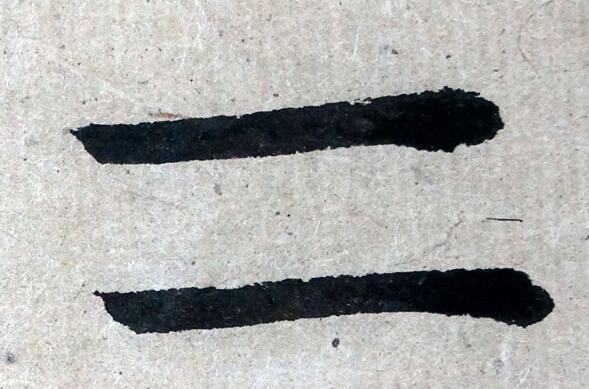
Lines created by dragging a Chinese brush are relatively uniform and clean, as shown below:
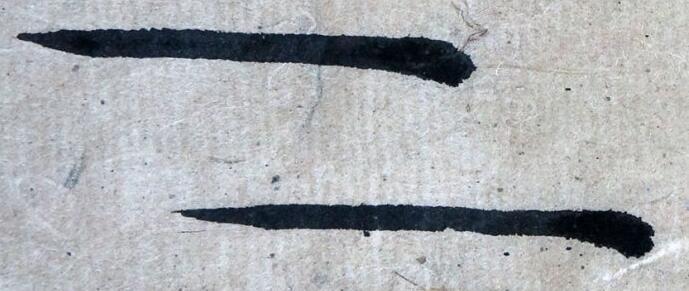
Why are dragged lines more uniform? Because when you drag the brush along, the writing speed is relatively consistent, so the shape doesn’t change dramatically.
Many contemporary calligraphers write by dragging the brush, especially when using long soft goat hair brushes. Why do they write this way? Because contemporary calligraphers have a concept called “center tip technique,” believing that only when the brush tip travels along the centerline of each stroke is it considered correct center tip writing. As a result, this steady and balanced brush movement emerged—dragging along.
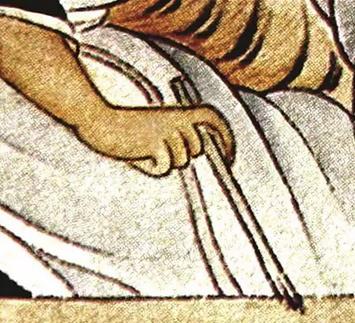
(Qi Ming‘s note: Here, I don’t entirely agree that center tip writing means steady and balanced. What Teacher Gu Dian describes as “dragging along,” as I understand it, means applying less pressure from the brush to the paper surface. This feeling is similar to dragging a mop to rinse it after mopping, as shown below:
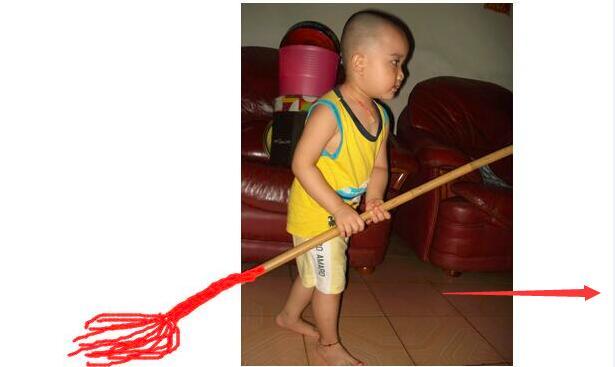
I searched for many images but couldn’t find a suitable one, so I had to draw a mop head here. The child moves to the right, and at this moment the mop head is just dragging along the floor.
What Qi Ming wants to emphasize is that the child isn’t purposefully applying force through the mop handle to the mop head and transmitting that force to the floor. In contrast, when deliberately using the mop to push against a particularly dirty spot on the floor, that would belong to the pushing brush effect discussed below.)
The Pushing Technique
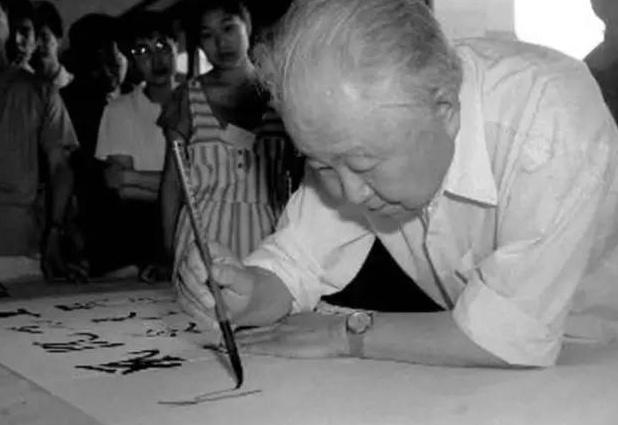
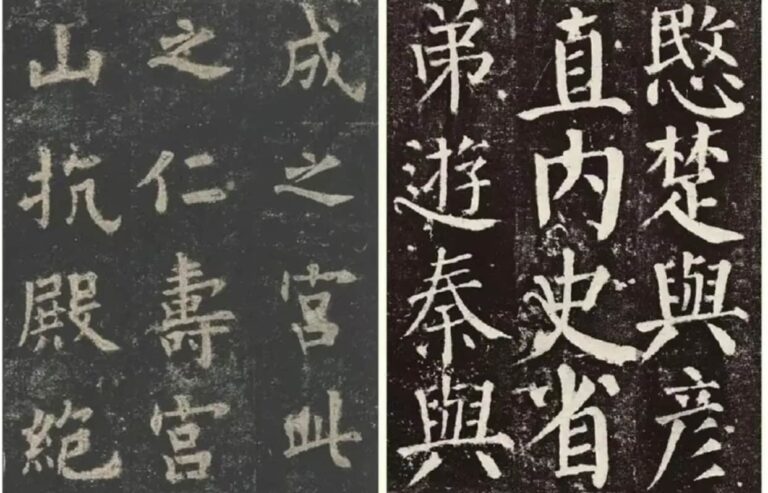
The other brush technique we compare to sweeping the floor—that is, pushing the Chinese brush along. The effect is shown below:
When pushing the brush along, the speed varies, so the lines will have thickness contrast and won’t be too uniform. I believe classical works were mostly created by pushing, which is why their forms are incredibly varied. Because you need to push with force, writing by pushing requires short-tipped firm bristle brushes, just like a broom can’t be made too long.
When pushing the brush along, the brush tip doesn’t necessarily travel along the center of each stroke, but the force is concentrated at the center. Just like our broom, which is often designed at an angle, this angle conveniently helps us transmit force to the floor when sweeping.
In the secret transmission of Tang Dynasty brush techniques, there’s a saying “like a cone carving through sand,” which means you should feel the resistance of the paper surface while writing. Only by pushing the brush along can you achieve this requirement.
Comparing the Two Techniques
Looking at the effects on paper, pushing and dragging produce different results:
Visual Effect: Dragging creates marks that are relatively flat, while pushing creates marks that are more three-dimensional.
Energy: Dragged marks appear quieter, while pushed marks are full of dynamic energy.
Variety: Dragged marks are more monotonous, while pushed marks show rich variation.
Quality: Even the straightest dragged mark, when examined closely, appears hesitant and uncertain, while even the most curved pushed mark is full of decisiveness.
You can discover more differences by trying it yourself.
As for how to push the Chinese brush along, that requires a separate article to explain in detail.
You May Also Like:
What Are Resting Wrist, Suspended Wrist, Suspended Elbow and How to Choose?
How to Appreciate Chinese Calligraphy: A Complete Guide
What is Xuan Paper Made of? Complete Materials Guide