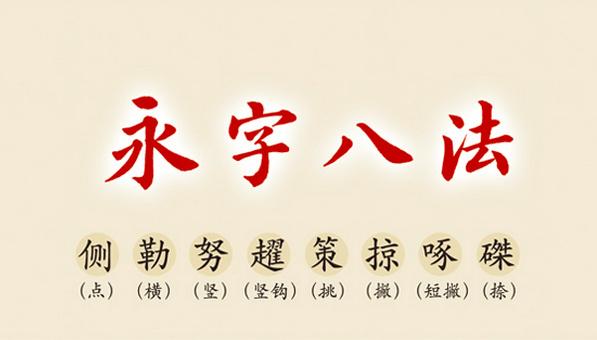
A calligraphy enthusiast recently asked me on WeChat about the difference between concealed tips (cangfeng 藏锋)and exposed tips(loufeng 露锋) in brush strokes. I shared an illustration with them (see Figure 1 showing concealed and exposed tips in regular script strokes) and recommended they watch Episode 11 of Tian Yunzhang’s daily calligraphy series, where Master Tian explains this topic in detail.
Since many calligraphy learners will likely have the same question, I decided to write this comprehensive guide about concealed tips and exposed tips in Chinese brush calligraphy.
Understanding Concealed Tips and Exposed Tips
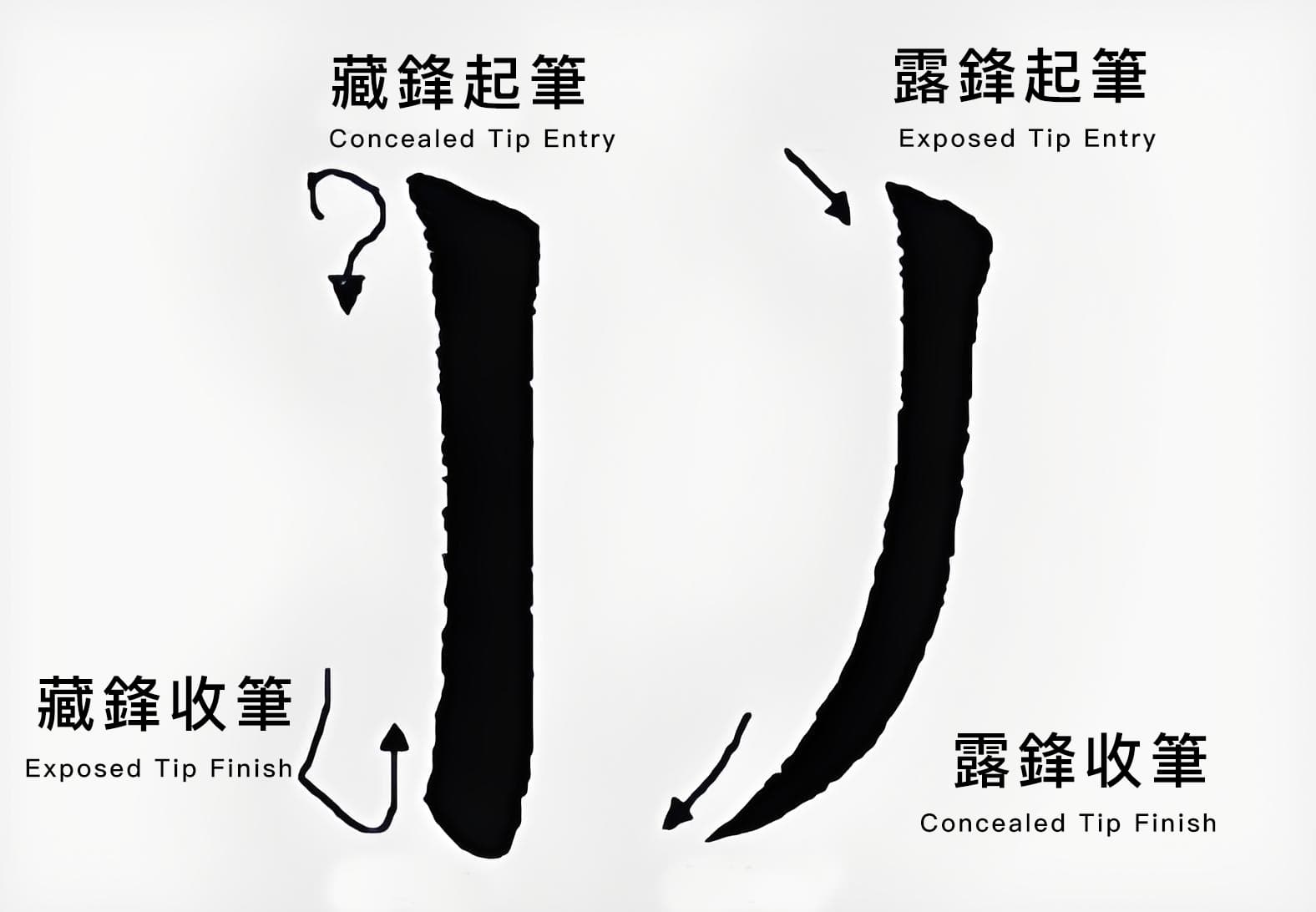
Figure 1: Concealed and exposed tips in regular script strokes
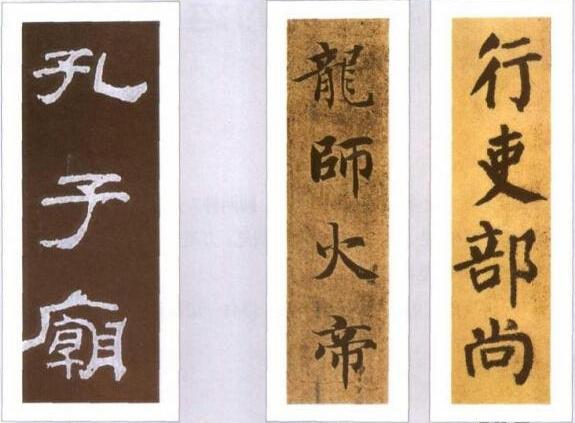
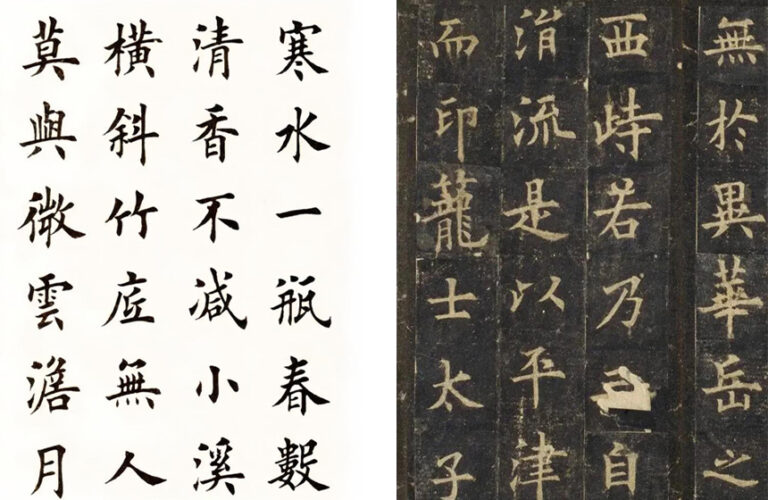
Figure 2: Clerical script on the left typically uses concealed tips; regular script on the right may use either concealed or exposed tips
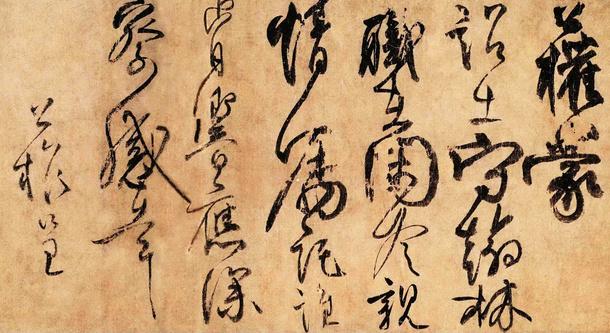
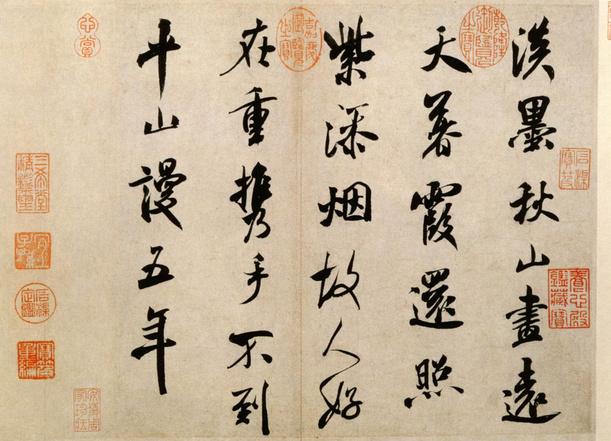
Throughout history, famous calligraphers like Wang Xizhi, Wang Chong, and Sun Guoting preferred using exposed tips, while masters like Yan Zhenqing, He Shaoji, and Yi Bingshou favored concealed tips.
In Qi Ming’s view, exposed tips usually appear sharp and pointed, while concealed tips appear “rounded.” After reviewing many articles on this topic, I found that Teacher Zhang Fubin’s explanation was the most thorough. Below is his article with my additional notes, which I hope will be helpful to everyone.
Full Article:
Many calligraphy students struggle with understanding concealed tips and exposed tips. Are they hand movements? Brush tip motions? Or effects on paper? The confusion can be frustrating. Today, let’s clarify this once and for all!
1. Where Do Concealed Tips and Exposed Tips Appear?
First, let’s categorize and clarify these terms.
At the beginning of a stroke, we can use either concealed tips or exposed tips. (Qi Ming’s note: This means these two techniques typically appear at the starting point of a stroke, as you’ll see in the illustrations.)
During the stroke, we can use center tip or side tip techniques.
At the end of a stroke, we can use gathered tips or released tips.
2. The Pivot Point Controls the Chinese Brush
When holding a Chinese brush for writing, your hand provides the power and the brush is the tool. Like a lever, there’s a force arm and a pivot point involved. Finding the correct pivot point determines the length of the force arm, which in turn defines your writing space range.
Once you establish your writing pivot point, the range of your brush movement depends on the length of your force arm.
(1) When using your wrist as the pivot point, your writing range depends on your finger length (wrist-resting position).
(2) When using your elbow as the pivot point, your writing range depends on your forearm length (elbow-resting position).
(3) When using your shoulder as the pivot point, your writing range depends on your entire arm length (suspended elbow position).
No matter which method you use, the brush writing motion is limited to a specific space range—it’s not absolutely unlimited freedom. The pivot point “tethers” the brush!
3. Extension and Retraction Movements Are the Foundation
The pivot point tethers the brush. Within this limited movement space, starting any stroke requires an extending and retracting motion. Without this back-and-forth action, you cannot write strokes properly.
This creates the principle: “To go right, first move left (horizontal strokes); to go down, first move up (vertical strokes); to go left-down, first move right-up (left-falling strokes); to go right-down, first move left-up (right-falling strokes).”
As the brush tip drops from the air onto paper, observe where the entry point lands—inside or outside the stroke. If the entry point is inside the stroke, it’s a concealed tip. If the entry point is outside the stroke, it’s an exposed tip.
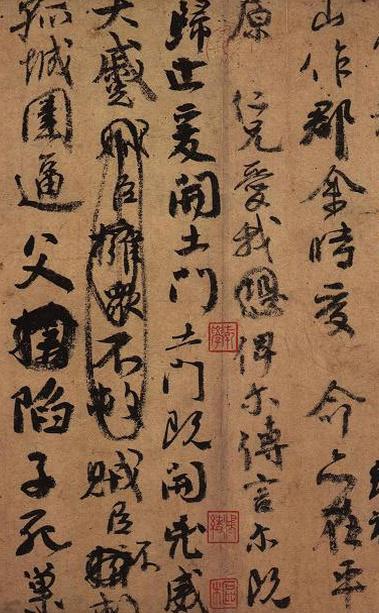
1. Wang Xizhi’s entry points mostly use exposed tips.
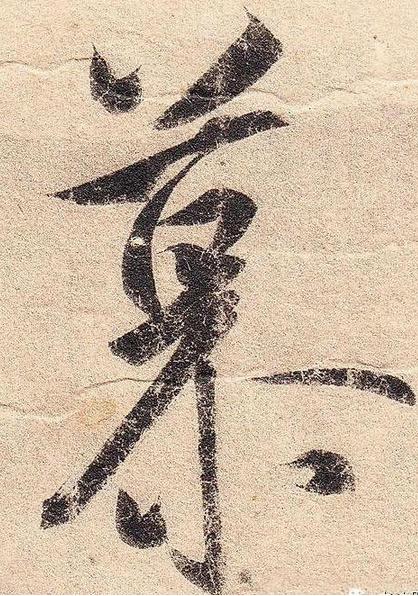
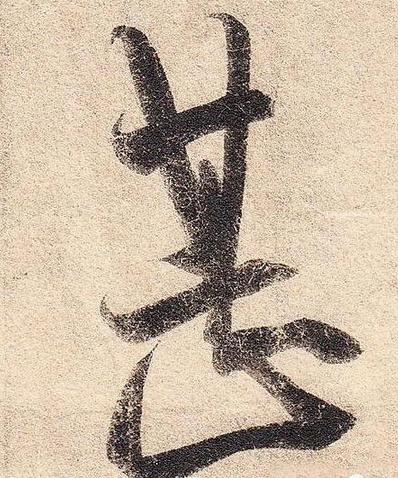
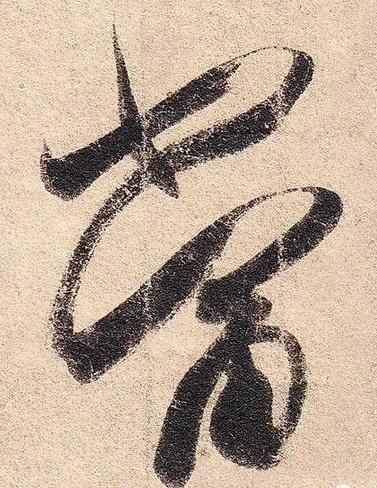
2. Wang Chong’s entry points mostly use exposed tips.
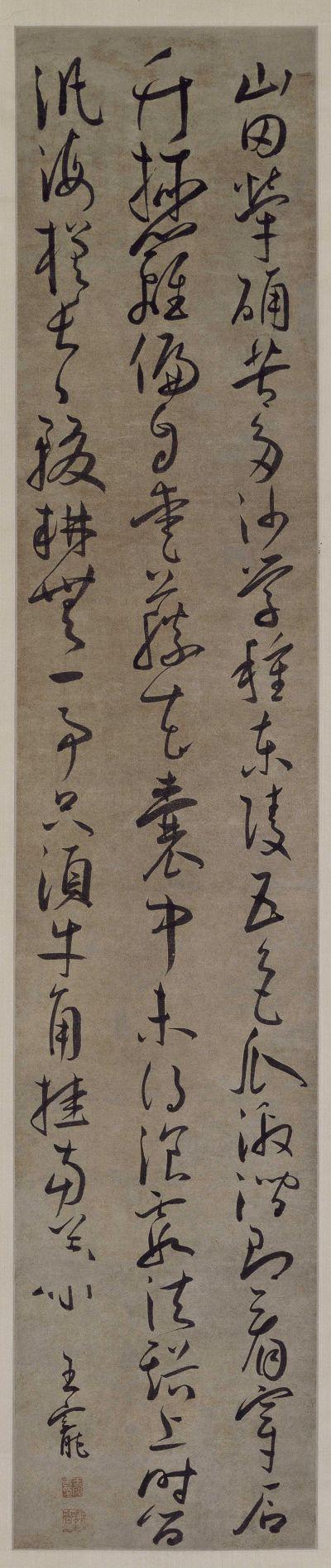
3. Sun Guoting‘s entry points mostly use exposed tips.
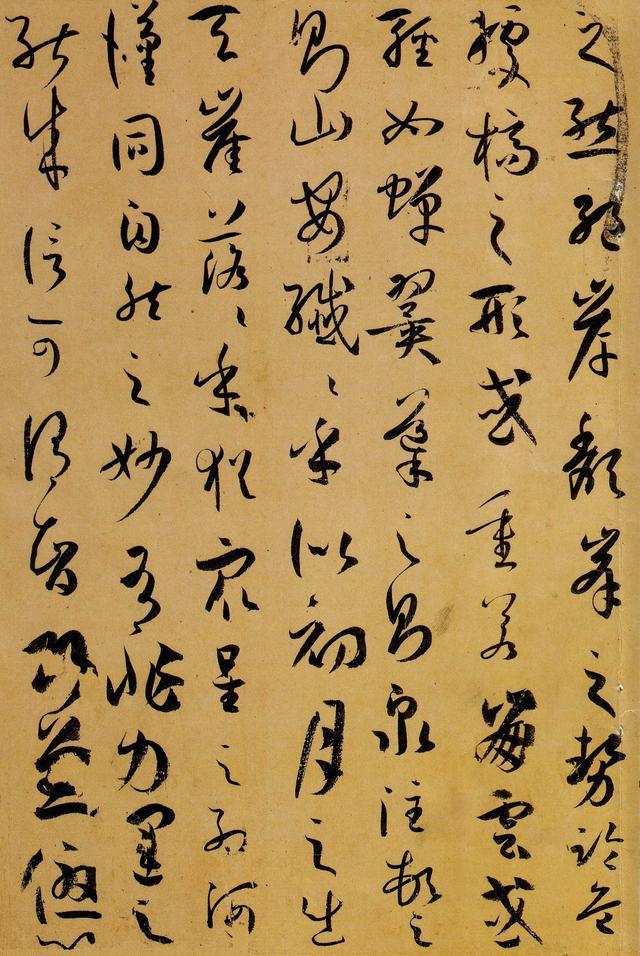
4. Sun Xiaoyun’s entry points mostly use exposed tips.
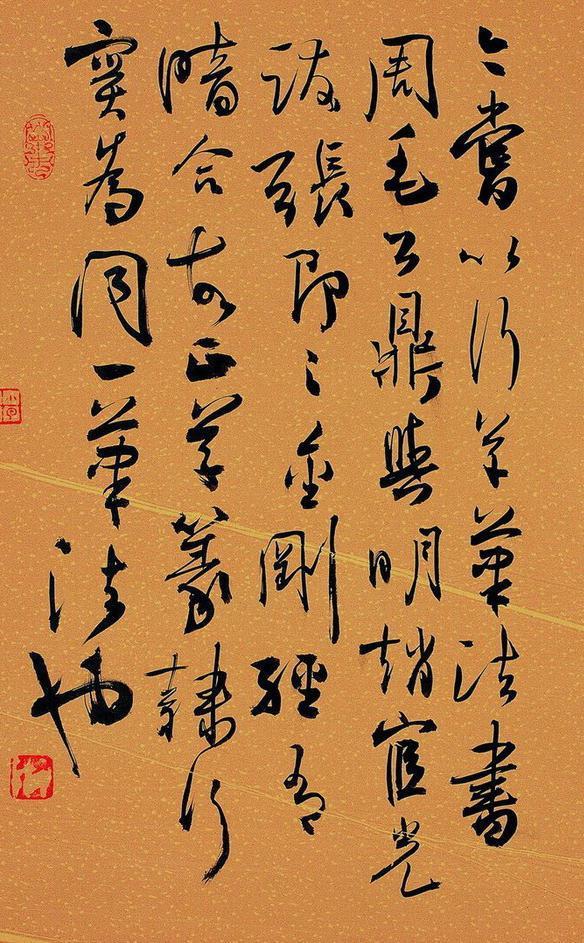
5. He Shaoji’s entry points mostly use concealed tips.
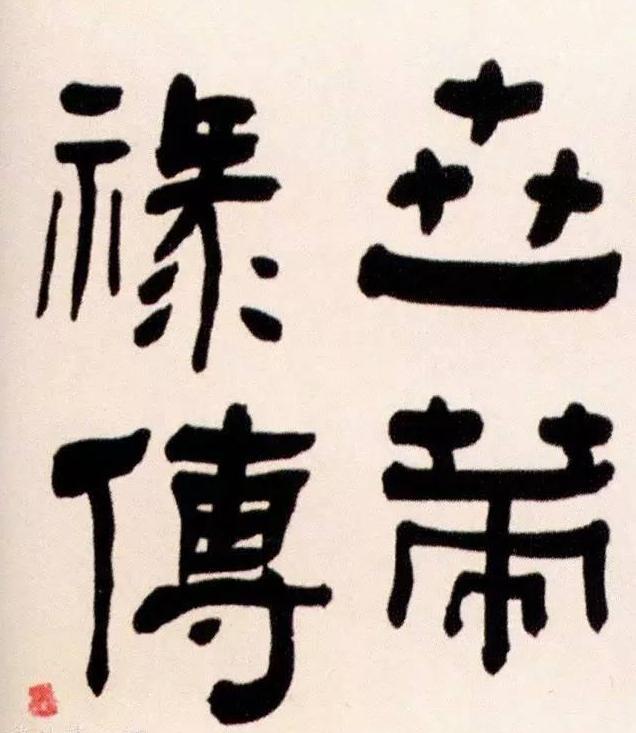
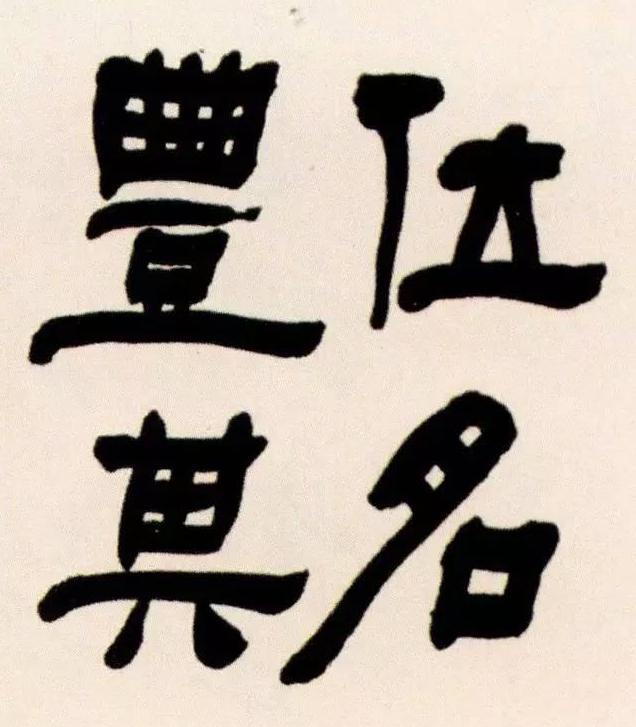
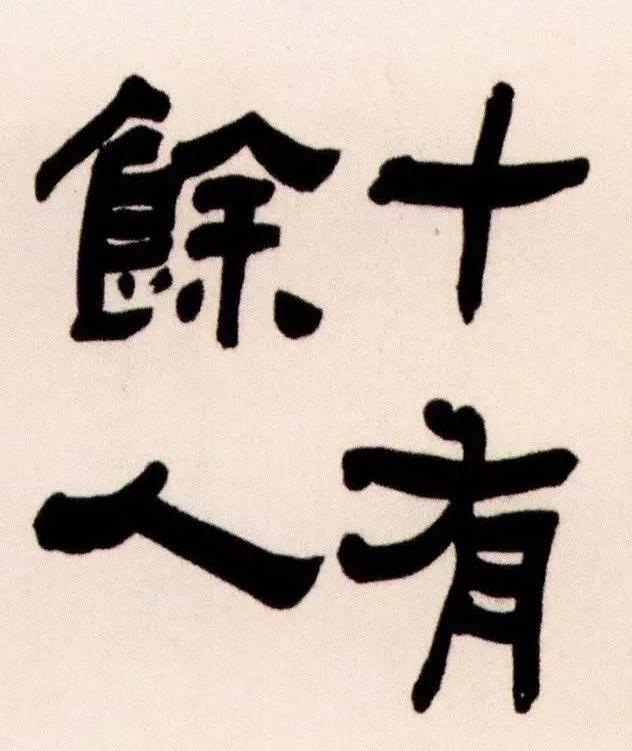
6. Yi Bingshou’s entry points mostly use concealed tips.
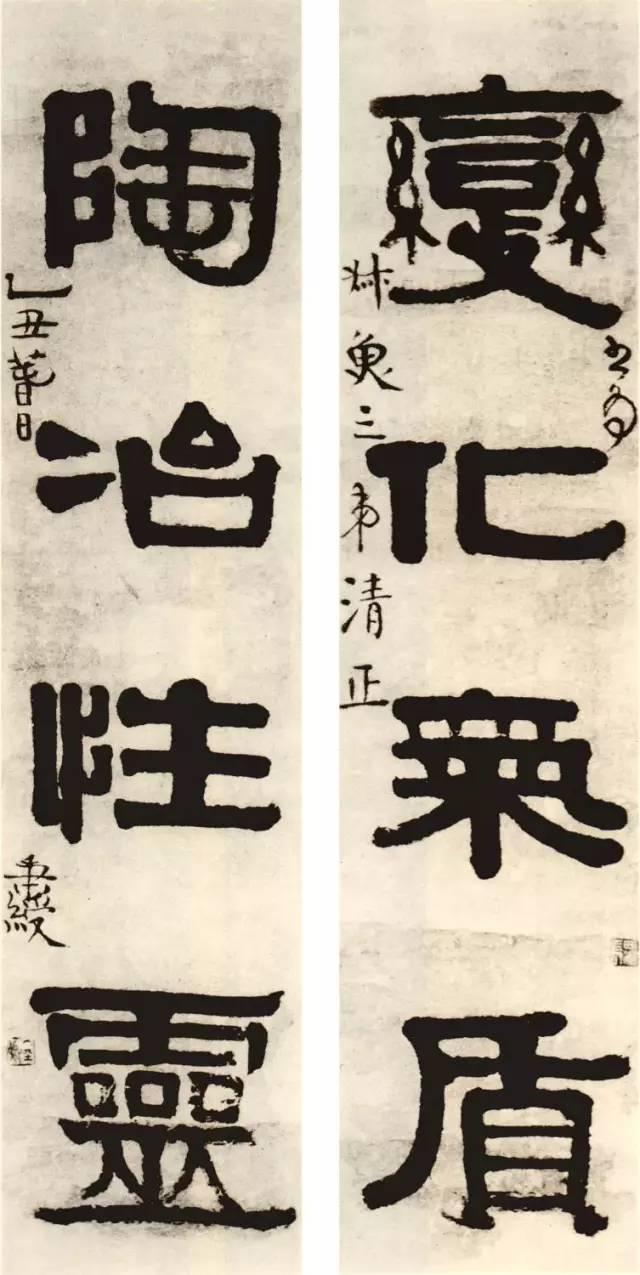
7. Yan Zhenqing’s entry points mostly use concealed tips.
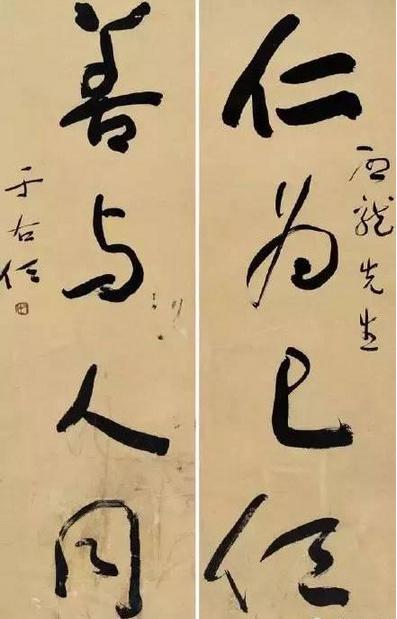
8. Yu Youren’s entry points mostly use concealed tips.
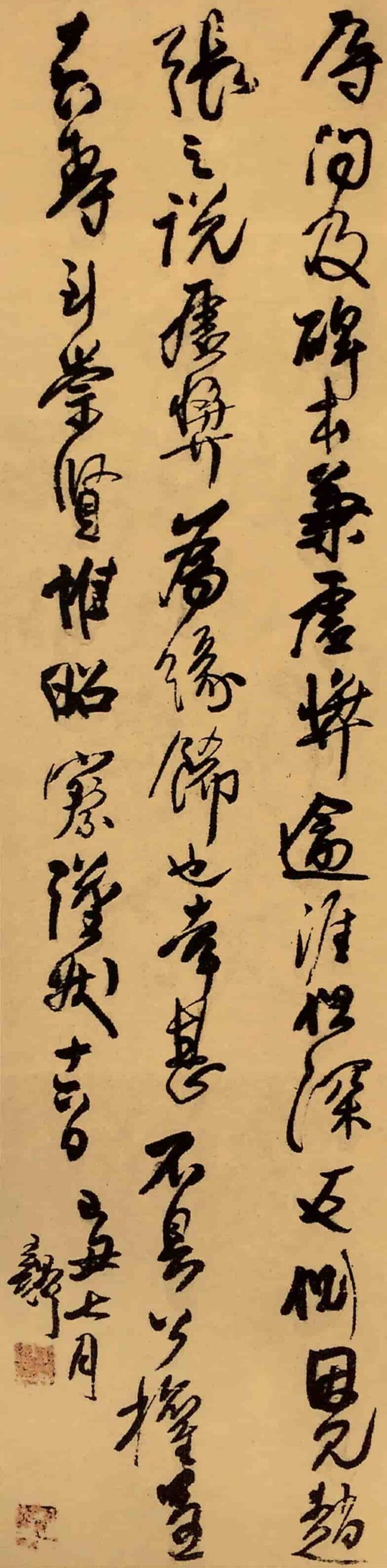
9. Wang Duo’s entry points mostly use concealed tips.
The Essential Understanding
Once you understand the writing movements, the terms “concealed tip” and “exposed tip” have clear meaning!
When you know the extending and retracting motions, you only need to say “to go left, first move right” or “to go up, first move down,” or simply describe the entry point position.
Once you understand the source of these movements, why even use the terms concealed tip and exposed tip?
Concealed and exposed tips form naturally through smooth hand movements—they’re not deliberately drawn effects. In essence, calligraphy has no concealed tips, no exposed tips!
Tracing back to the source, everything starts at the beginning point—your movement!
Calligraphy doesn’t need the terms concealed tips or exposed tips!
You May Also Like:
Eight Principles of Yong: Why Beginners Start Here and What Else You Need
How to Appreciate Chinese Calligraphy: A Complete Guide
How to Read Chinese Calligraphy: 10 Essential Observation Tips